
Accessories are what keep a Japanese knife kit usable day to day. A good sheath, a sturdy holder and a flattening stone cover the basics: protecting the edge, storing the blade safely and keeping your sharpening stones flat enough to work well.
Japanese knives have thin, hard edges, and that is part of why people love them. The same thin edge chips more easily if it knocks against a drawer, a countertop or another pan. A few inexpensive pieces stop most of that damage before it starts, and they cost far less than replacing a blade or paying for a repair.
Think about how you actually use your knives. If you cook at home and grab the same knife every night, a magnetic holder on the wall or a fridge side may suit you best. If you travel to cooking classes or carry knives to a friend's place, you will want something that covers the blade fully. Your habits should drive what you buy.
Look for a few simple buying factors before you add anything to your cart:
- The knife's exact length, since a sheath or saya is made for one blade size
- Whether you need a cover for the blade only or a holder that keeps the knife on a wall
- How you plan to mount a holder, and whether the spot allows drilling
- The wood or material, and whether it suits the place you will store it
Always check the product title and the maker's notes for the blade size it fits. A cover that is too loose can slide off, and one that is too tight can scrape the edge when you slide the knife in.
Choosing the Right Knife Sheath or Saya
A saya is the traditional wooden sheath for a Japanese knife, and it is cut to fit one blade shape and length. That fit is the whole point, so start with the blade you own and the length you measure along the edge, not the handle.
Sheaths come in a few basic styles, and each one suits a different routine:
- Full-length covers that slide over the entire blade and are good for bags and drawers.
- Half or partial covers that protect the tip and the edge but leave the heel open.
- Magnetic wood guards that stick to the back of the blade and cover the edge on one side.
Magnetic guards work well for a knife you pull out often, since you can slide it off in one motion. Just keep in mind that a magnet can pull on a knife with a thin blade if the guard is set down wrong, so set it on the spine, not the edge.

Magnetic Wood Saya Knife Guard for 210mm Gyuto and Chef's Knife
A black ash wood sheath that slides over your blade and holds it snug with a magnet.
Product information
Our review: 4.0 out of 5
Product links
Pay attention to the wood and the finish too. Wood can swell or warp if it gets wet and stays wet, so dry the knife fully before you slide it into a wooden cover, and keep covers away from the sink and the dishwasher. Look for a smooth, sanded inside so the blade does not catch while you slide it in and out.
Before you buy, check these details:
- The blade length in millimeters or inches, measured from the heel to the tip.
- The blade style, such as gyuto, santoku, nakiri or paring, since the shape matters as much as the length.
- Whether the cover is meant for a single blade or can hold more than one knife.
If you are not sure of the exact size, check the maker's notes for the blade the cover fits. A cover that is a few millimeters too long can rattle, and a cover that is too narrow can press on the edge.
Keeping Your Blade Sharp and Protected
Japanese knives are usually sharpened on water stones, and those stones wear down unevenly over time. A stone that has gone hollow in the middle will give you an uneven edge no matter how carefully you work. A flattening stone, like the Flattening Stone for Re-Leveling Sharpening Stones and Waterstones in our list, is meant for exactly this job. Check the maker's notes for how it should be used on your particular stone.
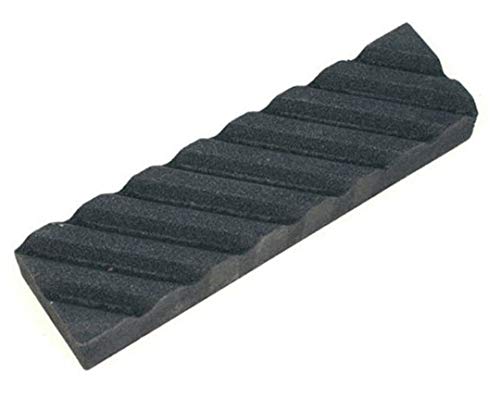
Flattening Stone for Re-Leveling Sharpening Stones and Waterstones
A coarse silicon carbide flattening stone with grooves that catch swarf as you level your whetstones.
Product information
Our review: 4.2 out of 5
Product links
Flattening is simpler than it sounds. Here is the general process most people follow:
- Soak your waterstone until the bubbles stop rising. Check the maker's instructions for the soak time, since it varies by stone.
- Set the stone on a flat, non-slip base so it does not slide while you work.
- Wet the flattening stone and rub it across the sharpening stone in long, even strokes, changing direction often.
- Stop every so often, rinse, and look at the surface. Keep going until the whole face looks even.
Wet stones and the grey slurry they throw off make a mess, so work over a towel or a tray you do not mind getting dirty. Keep the blade off the work area while you flatten, and never hold a knife in one hand while you move a stone with the other.
Protection matters between sharpening sessions too. A knife that sits wet on a board or in a drawer can start to rust, especially if it is carbon steel. After washing, wipe the blade dry right away with a soft towel, and let the edge air dry for a bit before you put it away. If you know you will not use a carbon knife for a while, many owners lightly oil the blade before storing it. Ask the maker what they recommend for your steel, because stainless and carbon blades need different care.
Finally, pay attention to how your stones are stored. Most waterstones should dry out completely between uses, and many people keep them on a shelf away from the sink. Store them somewhere they will not get knocked or dropped, since a cracked stone is hard to fix and can be dangerous if a piece breaks off mid-session.
Pros
- Wooden saya covers protect the blade edge when the knife is stored in a drawer or bag, so you are less likely to nick the edge or cut yourself reaching for it.
- Magnetic knife holders keep your knives off the counter and within easy reach, which frees up drawer space.
- Replacement handles let you refresh an older Japanese knife without buying a whole new blade.
- Blank wooden handles give you a way to build a custom handle that fits your grip and your knife's tang.
- A flattening stone is the simple way to keep waterstones flat, which helps your sharpening work more evenly over time.
Cons
- Wooden saya covers and handles need a little care, since wood can warp or crack if it stays wet or gets left in a hot, dry spot.
- A replacement handle is a DIY job, so you will need some basic tools and patience to fit it, and a bad fit can make the knife feel off in your hand.
- Magnetic holders only work well if your knife has a steel blade strong enough to stick, so they may not hold every knife you own.
- Blade covers can trap moisture if you put a wet knife inside, which may lead to rust over time.
- Wall-mounted holders need a suitable spot on the wall, and mounting one takes some planning if you rent or do not want to make holes.
Storing and Caring for Your Kit
Your knife kit lasts longer when you store it with a bit of routine. Start by choosing one spot for each piece and sticking with it, so you always know where the cover, the holder, or the stone lives when you need it.
Keep the blade dry and in its place. Before anything goes into a drawer, bag, or cover, wash it, dry it, and let it sit out for a minute so no water hides along the bevel. Store the knife in the same spot each time. Odds are you will stop hunting around the kitchen for it, and you will be less likely to bang the edge against something on the way.
Watch the temperature and sunlight around your storage spots. Wood can crack or warp in a hot, dry place, such as right above a stove, near a heater, or on a sunny windowsill. A spot that stays cool and out of direct sun is a safer pick for wooden covers and handles. Keep flammable things and heat sources well away from any wood you store, and never leave a hot pan or a heat source touching a wooden holder.

Magnetic Knife Block Holder with Strong Magnets and Acacia Wood
A solid acacia wood magnetic rack that holds your knives and tools with no screws or drilling needed.
Product information
Our review: 4.2 out of 5
Product links
Store knives out of reach of children and the edge of the counter. A sharp blade is a real hazard, especially a thin Japanese edge. Mount magnetic holders high enough that a kid cannot pull a knife off, and keep loose blades in a drawer or block where nobody reaches in blind. Hazards like this are worth a quick look each time you put things away.
Do a quick check every few months. Look at the wood for cracks, swelling, or soft spots. Make sure the magnetic holder still grips well and the mounting screws are snug. Check the flattening stone too, and store waterstones somewhere dry and stable. If anything looks damaged, check the maker's guidance before you keep using it, because the right fix depends on the material and the product.

